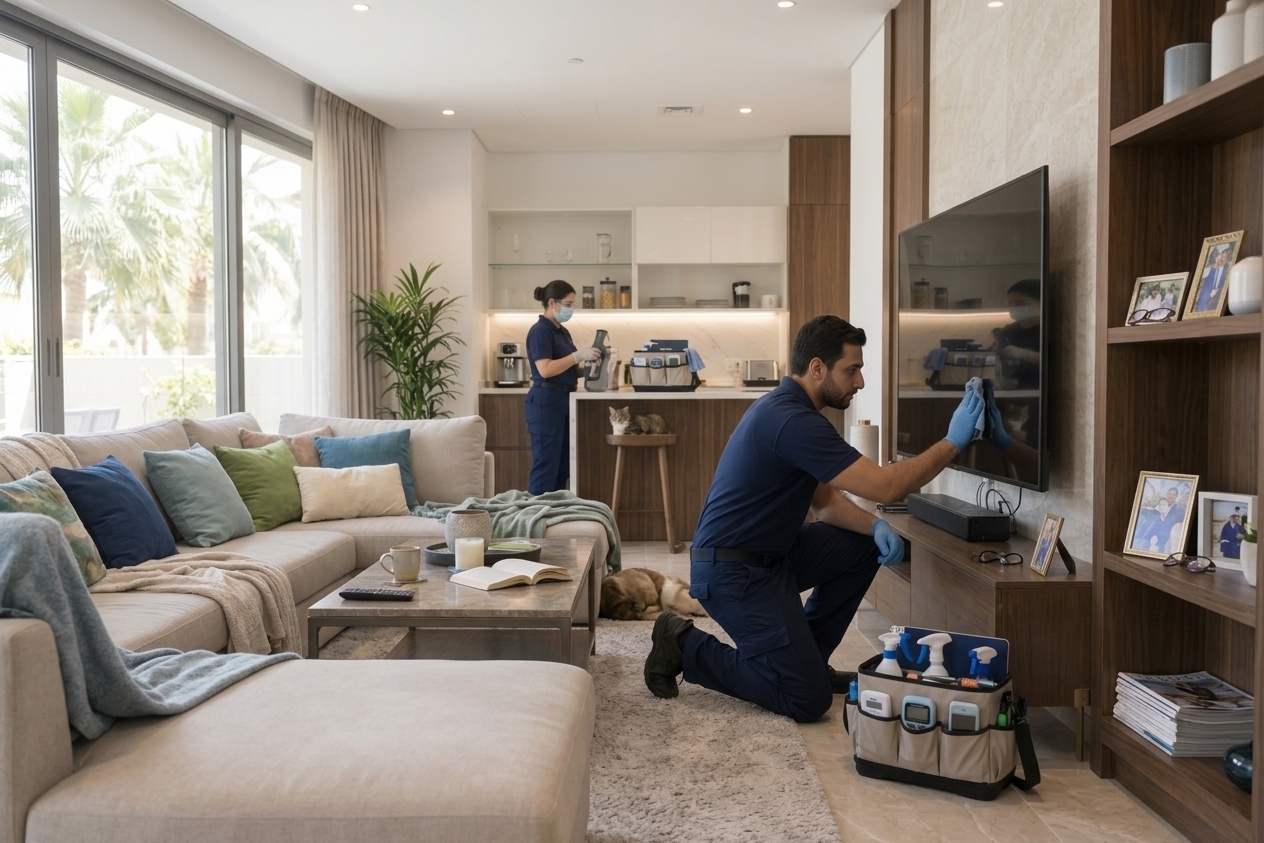
Once everyone's feeling better, it's tempting to just wash the sheets and move on with life. But flu virus can survive on hard surfaces for up to 48 hours, so a doorknob or TV remote can still carry live virus well after the sick person is back at work. Regular cleaning removes dirt but doesn't reliably kill viruses. This guide explains how to properly disinfect your home after flu, a cold, or any virus.
Cleaning vs Disinfecting: What's the Difference
Cleaning and disinfecting are two different processes, and confusing them is one of the main reasons infections keep circulating within a household. Cleaning is mechanical: soap, warm water, and friction lift dirt, oils, and some microbes off a surface. Disinfecting is chemical: active compounds such as quaternary ammonium, hydrogen peroxide, or alcohol destroy viruses and bacteria. Cleaning must always come first, because grime shields viruses and stops disinfectants from reaching them.
How to Disinfect a House After Influenza or a Virus
Focus on the high-touch points where hands transfer germs around the home.
1. Sanitize High-Touch Architectural Touchpoints
Use a cleaning caddy to work through doorknobs, cabinet handles, light switches, thermostats, appliance handles, and faucet levers. Wipe each with warm soapy water on a microfiber cloth, then apply a disinfectant. Keep the surface visibly wet for the full contact time on the label — usually two to ten minutes — before letting it air-dry. Wiping it off early removes only a fraction of the pathogens.
2. Decontaminate Shared Electronics
Remotes, phones, game controllers, and keyboards carry a heavy viral load. Never spray liquid directly onto electronics. Dampen a microfiber cloth with 70% isopropyl alcohol, or use electronics-safe disinfectant wipes, and clean every button and seam before letting it air-dry.
3. Deep-Sanitize Bathrooms and Food Prep Zones
Disinfect toilet flush levers, seat hinges, faucets, vanity tops, food prep surfaces, table edges, and fridge door seals — especially anywhere the sick person touched while preparing food.
4. High-Temperature Linen Laundry
Wash the sick person's bedding, pillowcases, towels, and clothing separately, on the hottest setting the care label allows — ideally 60°C or higher.
5. Establish Whole-Home Cross-Ventilation
Once surfaces are treated and laundry is running, open windows throughout the home. Fresh cross-ventilation clears airborne particles far better than recirculating closed air-conditioning.
How to Disinfect a Couch After Flu
Soft furniture needs more care than hard surfaces. Vacuum thoroughly first, including crevices and under removable cushions, before applying anything wet. Check the care label: some upholstery tolerates a fabric-safe disinfectant and some doesn't. Removable cushion covers can go in the washing machine on a hot cycle.
How to Disinfect a Mattress After Flu
Mattresses absorb sweat, skin cells, and germs, especially during a fever. Strip and wash all bedding on the warmest allowed setting. Vacuum the mattress with an upholstery attachment, then apply a fabric-safe disinfectant, testing a hidden patch first. Let it dry completely to prevent mold. Wash any mattress protector separately. For a complete reset, consider a full room deep clean covering shelves, curtains, and skirting boards — our home deep cleaning service in Dubai can handle it.
How to Sanitize Your House Completely
A single wipe-down may not be enough when several people are sick or the illness lasts several days. CDC guidance recommends closing off the sick person's area where possible, increasing airflow, and disinfecting shared items such as tablets, remotes, and doorknobs. Repeat the full process daily while anyone in the home still has symptoms.
Frequently Asked Questions
How long do flu and cold viruses survive on surfaces?
It varies by virus and surface. Flu can survive up to 48 hours on hard surfaces, so keep disinfecting even after symptoms ease.
Do I need to disinfect the whole house, or just the sick person's room?
Focus on their room and the shared high-touch surfaces they used — bathroom handles, kitchen surfaces, and electronics.
Can I use regular cleaning spray instead of an actual disinfectant?
No. Cleaning sprays remove dirt but don't reliably kill germs. Clean first, then use a product labeled as a disinfectant.
Is it safe to disinfect a couch or mattress with bleach?
Usually not. Bleach can discolor or damage fabrics and mattresses. Use a fabric-safe disinfectant and check the care label.
How soon after someone recovers should I disinfect their room?
Disinfect high-touch surfaces throughout the illness, then do a final full pass once they've recovered.
Does washing bedding in cold water kill germs?
Not reliably. Hot water is far more effective, so use the warmest setting the label allows.
Do I need special products, or will household cleaners work?
Standard disinfectants usually work. Check the label lists effectiveness against the germ you're dealing with and follow the full contact time.
Should I disinfect toys and electronics too?
Yes — especially shared items like remotes, tablets, and game controllers.
Can I just let time handle it instead of actively disinfecting?
You can wait, but actively disinfecting shortens how long viruses survive and lowers the risk of spreading illness.
Prefer to leave it to the professionals?
Book our home deep cleaning service in Dubai.
